


Current Status of Use
In many industrial sectors in Vietnam – from steel, cement, plastics, and wood production to construction, mechanics, and logistics – hydraulic oil plays a vital role as the “lifeblood” of machinery systems. Each year, tens of millions of liters of industrial lubricating oil (of which hydraulic oil accounts for a large proportion) are consumed (according to Vietnam Lubricant Market Statistics – VPI & Kline Group). However, the way many businesses are using, replacing, and managing oil still has many shortcomings.
The common practice in most factories is to change oil periodically based on operating hours, rather than based on the actual oil quality. This leads to significant waste for many businesses due to not utilizing the full lifespan of the oil, or worse, system failures due to premature oil degradation that goes undetected.
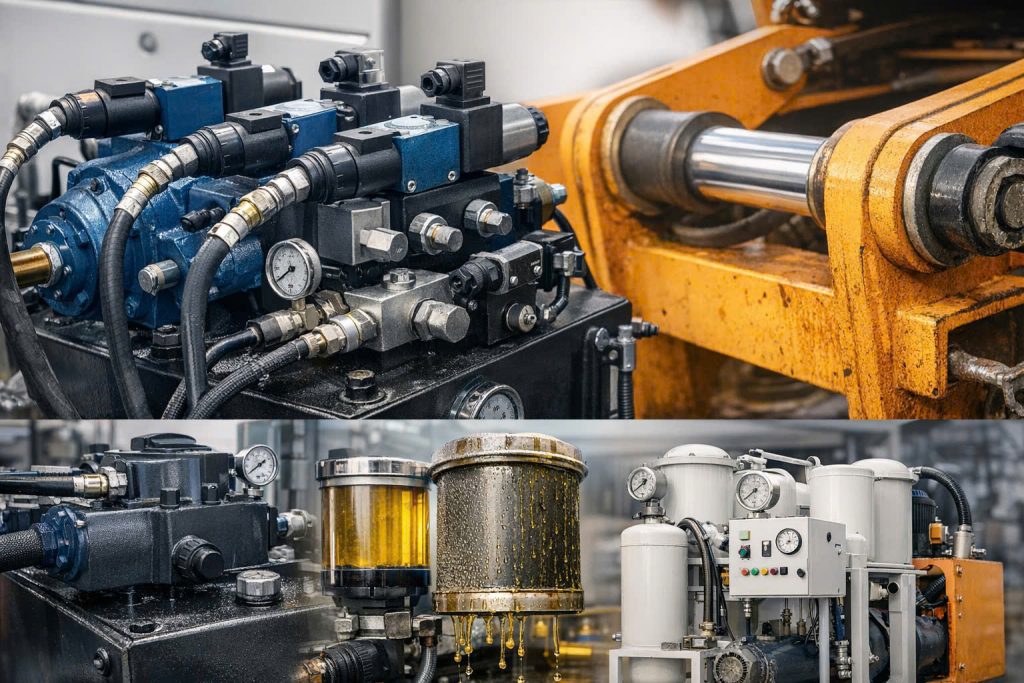
New hydraulic oil is highly regarded for its stable quality and ability to meet the requirements of high-pressure hydraulic systems. However, the reality of operation in Vietnam’s industrial environment presents a difficult problem: new oil often becomes contaminated after only a short period of use. Metal dust, water, wood chips, sand, burnt oil residue, or even microorganisms can all penetrate, causing the oil to quickly lose quality. This leads to increased temperature, reduced pressure, valve jamming, pump wear, and a significantly reduced system lifespan. Therefore, simply changing the oil periodically while ignoring oil quality during operation causes businesses to incur costs and face the risk of damage to expensive equipment.
Hydraulic Oil Reuse
In this context, many businesses have begun to switch to oil reuse through filtration and regeneration. This solution helps them save 30 to 70% of oil costs compared to complete replacement (according to studies and reports on industrial oil management practices – Machinery Lubrication & SMRP), while also reducing the amount of waste oil released into the environment.
However, the results of reuse depend heavily on the technology and quality of the filtration equipment. Some units only use coarse filtration methods, resulting in oil that does not achieve deep cleanliness and quickly degrades again. Some places use vacuum filtration to remove water and dissolved gases, suitable for systems working in hot and humid environments. The current trend is to use modern regeneration technologies such as deep filtration below 5 microns or nanofiltration, helping reused oil achieve cleanliness equivalent to new oil and maintain long-term stability during operation.
Problems Arising
In reality, approximately 80% of hydraulic failures stem from contaminated oil – including contamination with solid particles, water, and other impurities (according to a compilation of hydraulic engineering studies by ISO, Machinery Lubrication, and industrial maintenance associations). Metal contamination, black deposits, water, or industrial dust can all cause serious equipment malfunctions. A single liter of contaminated oil can cause pump wear, valve jamming, reduced pressure, and increased power consumption. In many cases, the cost of repairing a high-capacity hydraulic pump far exceeds the cost of oil regeneration according to technical standards.
New Trend
For these reasons, the “oil change” mindset is gradually shifting to a “oil maintenance” mindset – meaning keeping the oil clean, stable, and safe for the system. This is not only a cost-effective solution but also protects equipment and reduces industrial waste.
This trend is developing strongly in Vietnam due to the increasing pressure to optimize operating costs. A medium-sized factory can save hundreds of millions of VND annually by implementing a proper oil filtration and regeneration process. Simultaneously, maintaining clean oil helps pumps, valves, and cylinders operate two to three times more reliably than when using uncontrolled oil (according to reports on hydraulic oil cleanliness management – ISO 4406).
The solution for the future lies in proactively managing hydraulic oil instead of dealing with the consequences after it has degraded. Businesses should periodically check oil cleanliness, monitor color, odor, temperature, pressure, and any unusual signs in the equipment. When oil is properly managed, hydraulic systems not only last longer but also operate more smoothly, stably, and economically.
The current state of hydraulic oil usage in Vietnam is undergoing a significant transformation: from routine oil changes to standardized oil management. This is not only an economical solution but also a necessary step for businesses to move towards modern, sustainable, and more competitive production in the market.
SOLEN offers you hydraulic oil filtration solutions with nano-filtration technology from Japan.
References
1. Machinery Lubrication – Hydraulic Fluid Contamination and Control
(Studies show that 70–90% of hydraulic failures are related to contaminated oil)
2. ISO 4406:2017 – Hydraulic Fluid Power – Fluids – Method for coding the level of contamination
(International standard for hydraulic oil cleanliness)
3. SMRP – Society for Maintenance & Reliability Professionals
Reclaiming and Reusing Hydraulic Oil
(Economic efficiency of oil filtration and regeneration, saving 30–70%)
4. Kline Group & Vietnam Petroleum Institute (VPI)
Vietnam Lubricants Market Overview
(The scale of industrial lubricant consumption in Vietnam is in the tens of millions of liters/year)

 Tiếng Việt
 日本語
日本語