


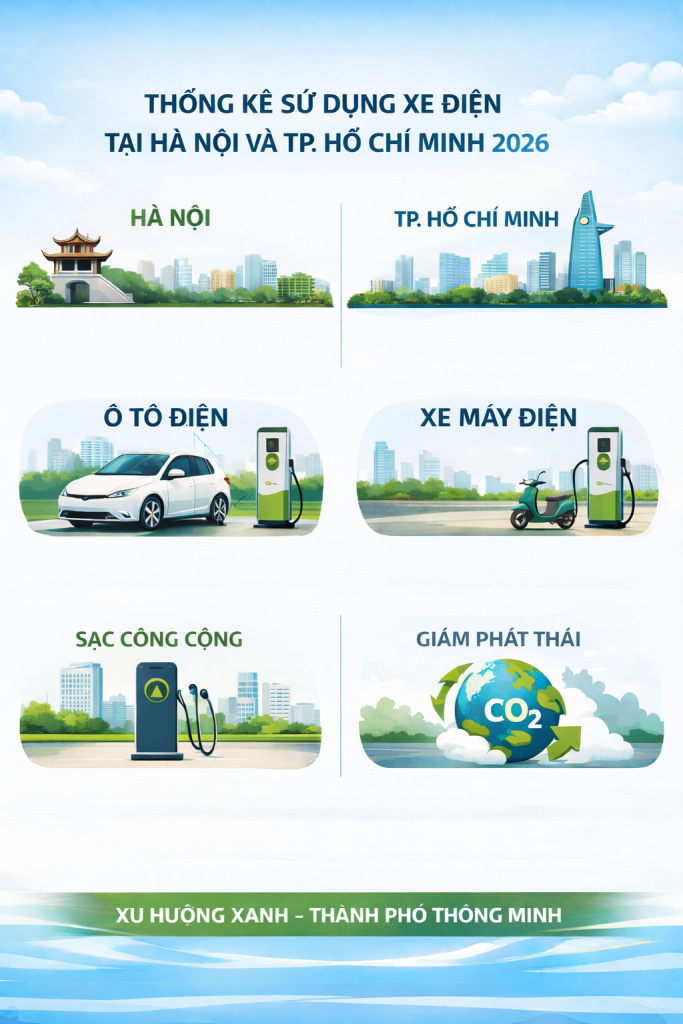
In the context of aiming for net zero emissions by 2050, the transition to green transportation is no longer a long-term roadmap but is happening rapidly, becoming an inevitable trend. Hanoi and Ho Chi Minh City – two special urban areas – are leading the country in the rate of electric car and electric motorbike usage. Based on data updated to the end of Q3/2025 and the beginning of 2026, SOLEN has compiled the outstanding figures on this “boom”.
1. Overview of the electric vehicle (EV) market in the two major cities
According to data from the Ministry of Construction and market research units, Vietnam is experiencing the fastest electric vehicle growth rate in Southeast Asia. In Hanoi and Ho Chi Minh City… In Ho Chi Minh City, this transformation is particularly evident thanks to:
Preferential policies: Tax and fee reductions, along with new regulations restricting vehicle emissions (such as the ban on gasoline-powered motorbikes within Hanoi’s Ring Road 1 from 2026).
Charging station infrastructure: The rapid development of charging stations by VinFast and other companies.
Hanoi and Ho Chi Minh City are actively deploying smart battery swapping stations, allowing battery replacement in just 3-5 minutes, effectively addressing the charging time barrier. In Ho Chi Minh City, these stations have begun to appear frequently at convenience stores and parking lots, while Hanoi focuses on developing automated battery swapping points to serve delivery fleets and electric taxis. This model not only optimizes productivity for commercial vehicles but also helps reduce pressure on the urban power grid during peak hours.
2. Detailed Statistics: Electric Cars and Electric Buses
As of the end of Q3 2025, there were approximately 183,240 electric passenger cars and nearly 1,000 electric buses in operation nationwide. Notably, Hanoi and Ho Chi Minh City were the two localities contributing the most to this number, with the highest rates of electrification in the country:
Hanoi: Approximately 38,445 electric passenger cars and 317 electric buses recorded.
Ho Chi Minh City: Approximately 38,444 electric passenger cars and 507 electric buses recorded.
2026 Trend: The proportion of electric and hybrid vehicles in total new car sales exceeded 40% in November 2025, indicating a very high demand for switching to pure electric vehicles.
The quote is from statistics officially published at the seminar “Solutions to promote green buildings and green transportation towards sustainable development goals,” organized by the Ministry of Construction in collaboration with specialized units on October 16, 2025.
3. Electric Motorcycle Statistics: Demand is accelerating strongly
Not only cars, but electric motorcycles are booming, especially the group of electric motorcycles that do not require a driver’s license (L1) and high-performance electric motorcycles (L3).
National growth: In the first half of 2025, Vietnam will consume approximately 209,000 new electric motorcycles, an increase of nearly 100% compared to the same period in 2024, ranking 3rd globally (after China and India).
Characteristics in Hanoi & Ho Chi Minh City: Electric motorcycles are becoming common in urban transportation, especially driven by rising gasoline prices.
2027 Target: Ho Chi Minh City Ho Chi Minh City aims for 50% of motorbikes owned by ride-hailing drivers (shippers, Grab drivers) to switch to electric vehicles.
4. Infrastructure and Environmental Challenges
The rapid increase in electric vehicles places high demands on infrastructure:
Power grid pressure: In Hanoi and Ho Chi Minh City, adding fast charging stations (especially modular battery swapping stations) in high-density urban areas poses a significant challenge to power infrastructure planning.
SOLEN Solution: Comprehensive environmental impact assessments of the electric vehicle battery lifecycle are needed, from production, use, charging to recycling or disposal, to ensure a truly sustainable “green transition”.
Conclusion
Hanoi and Ho Chi Minh City have become and are becoming the “locomotives” in the era of electric transportation. This boom not only helps reduce direct emissions (CO2 and toxic gases) in major cities but also creates positive pressure on infrastructure planning, towards a greener future.
References:
Ministry of Construction (2025). Summary report on the development of green buildings and green transport infrastructure in Vietnam, 2021-2025. Published at the seminar “Solutions to promote green buildings and green transport towards sustainable development goals”, Hanoi, October 16, 2025.
Prime Minister (2022). Decision No. 876/QD-TTg approving the Action Program on green energy transition, reduction of carbon and methane emissions in the transport sector. Issued on July 22, 2022.
Vietnam Motorcycle Manufacturers Association – VAMM (2026). Press release on 2025 sales results and market direction for two-wheeled vehicles. Published January 13, 2026.
Vietnam Register (2025). Statistical report on the number of newly registered and circulating motorized road vehicles as of the end of Q3 2025.
Motorcycles Data – McD (2025). Vietnam Electric Two-Wheeler Market Report – First Half of 2025. Published July 2025.
Ho Chi Minh City People’s Committee (2025). Plan for implementing the roadmap for converting public transport vehicles and smart charging/battery swapping station infrastructure.

 Tiếng Việt
 日本語
日本語