

Climate change is becoming increasingly evident through the trend of rising global temperatures and changes in extreme weather events, affecting ecosystems, infrastructure, and human lives. According to the World Meteorological Organization (WMO), the period 2015–2025 will be the 11 hottest years on record. In 2025 alone, the average global temperature will be approximately 1.43 ± 0.13°C higher than the period 1850–1900.
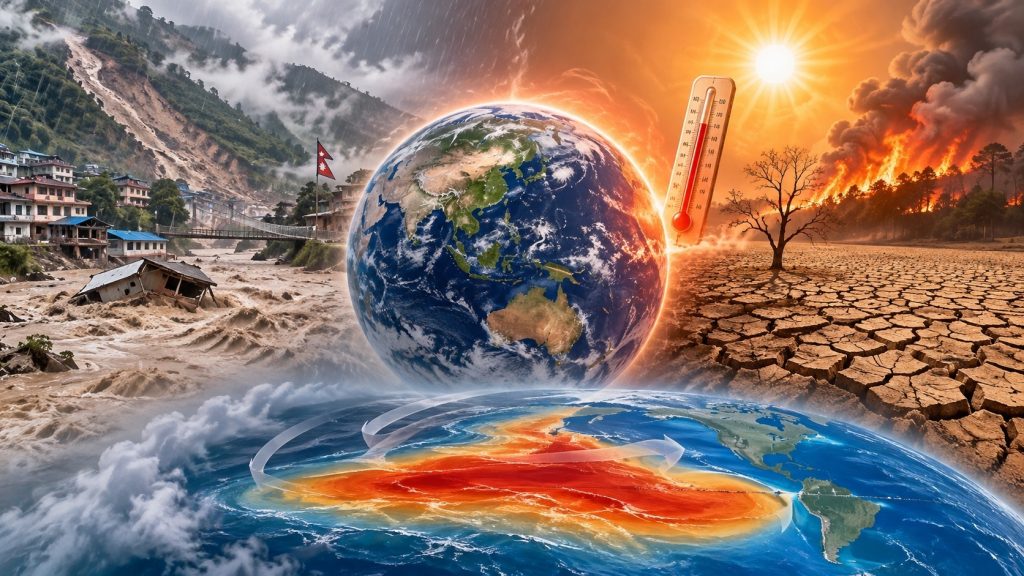
One of the notable manifestations is the increase in heavy rainfall and flooding. In Nepal, the flash flood on October 11, 2026, on the Budhi Gandaki river system caused damage to lives, homes, and infrastructure. Initial reports suggested that a temporary blockage in the river due to a landslide may have been the trigger. However, there is currently insufficient evidence to determine the extent of climate change’s contribution to this event.
Furthermore, research by World Weather Attribution on floods in Nepal in September 2024 showed that human-induced warming increased the intensity of the estimated rainfall event by about 10% and increased its likelihood by about 70%. The study also indicated that rapid urbanization, deforestation, land-use change, and limitations in drainage systems are contributing factors to increased damage from natural disasters.
Besides extreme weather events, the developing El Niño also poses significant concerns. According to a statement by the WMO on October 21, 2026, sea surface temperatures in the tropical Pacific could be 3.8°C above average between November 2026 and January 2027. For Southeast Asia, this phenomenon increases the risk of heatwaves, rainfall deficits, droughts, forest fires, and haze. However, the specific impact level depends on the climatic conditions of each locality.
Given these risks, climate change response needs to be implemented comprehensively through enhanced forecasting and early warning systems, land use management, forest protection, and ecosystem restoration. Solutions such as wetland restoration, urban green space development, and watershed reforestation can contribute to mitigating flood and heatwave risks.
SOLEN IPC Climate Observation_final

 Tiếng Việt
 日本語
