


🔋 What is Green Hydrogen?
Green Hydrogen is hydrogen produced by electrolyzing water using electricity generated from renewable sources such as solar ☀️ or wind power 💨 – emitting no CO₂. It is considered the “fuel of the future” due to its potential to replace fossil fuels in various sectors.
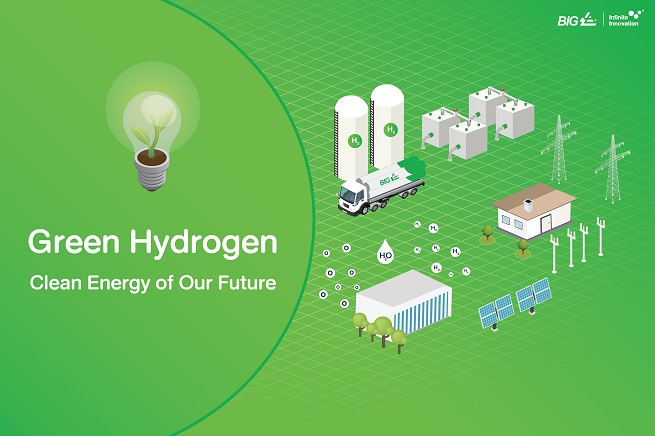
⚡ Why is Green Hydrogen important?
As the world shifts toward clean energy to tackle climate change, Green Hydrogen:
-
Acts as a large-scale energy storage solution 🏭⚡
-
Serves as a clean alternative for hard-to-decarbonize industries (steel, chemicals, heavy transport)
-
Helps reduce emissions in areas lacking low-cost, effective solutions
⚙️ How is Green Hydrogen produced?
There are several models for Green Hydrogen production:
-
🔅 Using solar photovoltaic (PV) power
-
🌬 Using wind turbines
-
🔋 Hybrid systems combining solar, wind, and battery storage
Combining renewable energy sources helps optimize efficiency and production costs.
🚀 Potential Applications of Green Hydrogen
Green Hydrogen can be used in various fields:
-
🧪 Feedstock for fertilizer and chemical production
-
🔥 Clean fuel for industry and transportation
-
💾 Energy storage for renewable power systems
💡 In 2022, global hydrogen consumption reached 95 million tonnes, mainly in oil refining and the production of ammonia, methanol, and steel.
🌍 What is the future of Green Hydrogen?
Green Hydrogen is expected to be a key energy pillar in achieving Net Zero Emissions (NZE). With technological advances and supportive policies, it will:
-
Lower production costs
-
Expand commercial applications
-
Drive the green and circular economy

 Tiếng Việt
 日本語
日本語